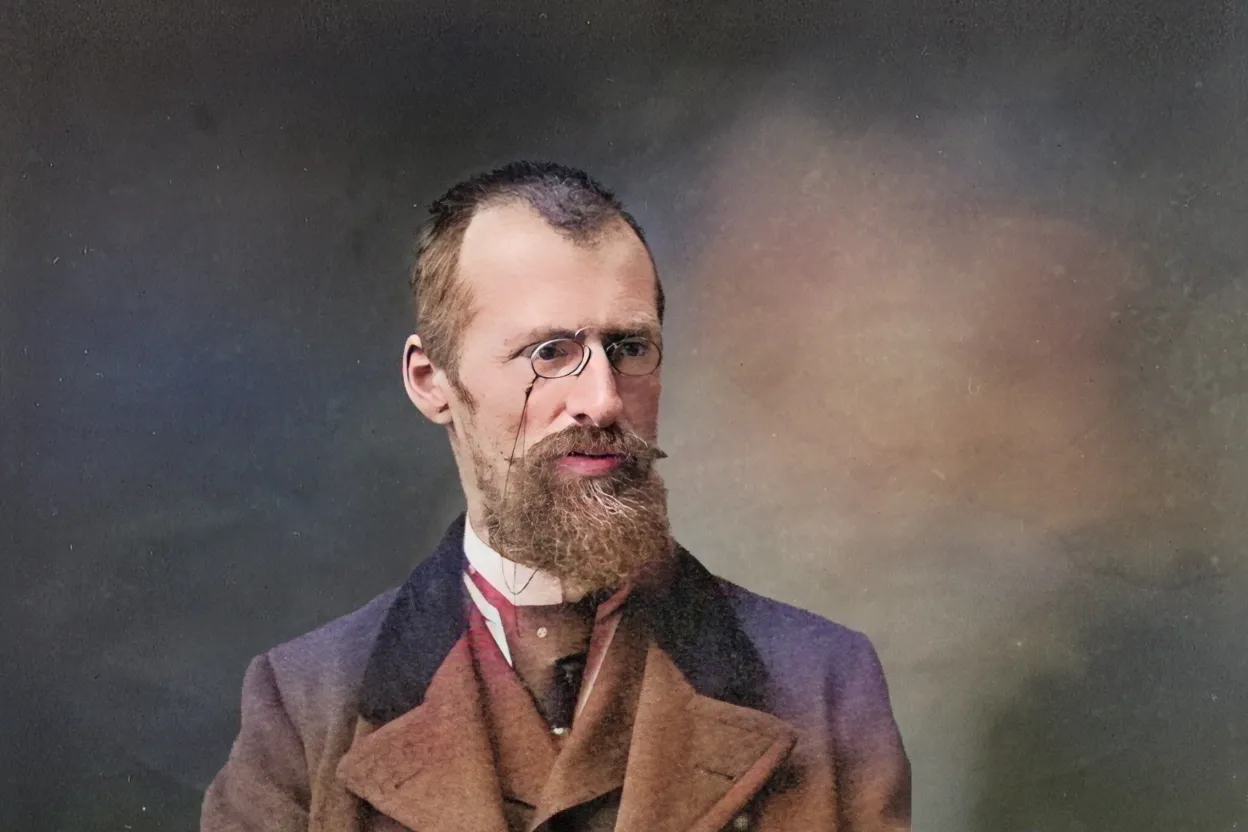
In 1893, Albert Robida published "Le Vingtième Siècle. La vie électrique," imagining France in 1952. Amidst flying airplanes and biological warfare, he predicted something extraordinary: virtual social networks through the "telephonoscope." It took 130 years, but he was right.
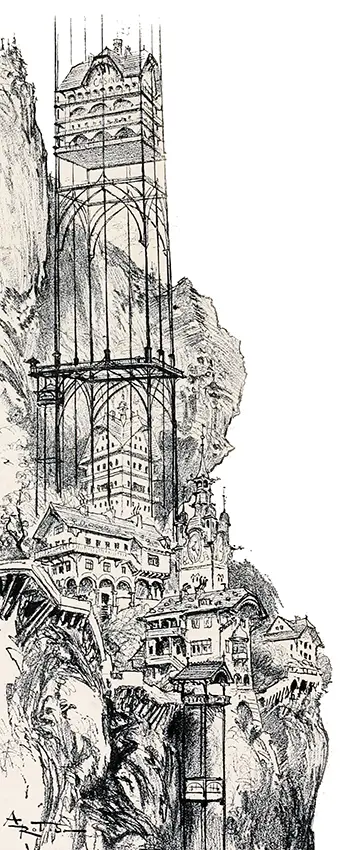
There is a peculiar moment in Albert Robida's futuristic novel in which the entire European power grid collapses during a storm. The "telephonoscopes"—devices that combined telephone, television, and videoconferencing—begin transmitting random communications, crossing paths with lives that should never have met.
It was by this meteorological accident that Georges Lorris, a young Parisian engineer, appeared on the screen of Estelle Lacombe, an engineering student isolated in an alpine lighthouse station a thousand meters high. She was terrified by the storm, alone. He tried to calm her down. They started talking. They fell in love.
In 1893, Albert Robida imagined this. He called it "Le Vingtième Siècle. La vie électrique" — the twentieth century, electric life. It was his projection of French society in the year 1952.
The Civilizational Laboratory of the 19th Century
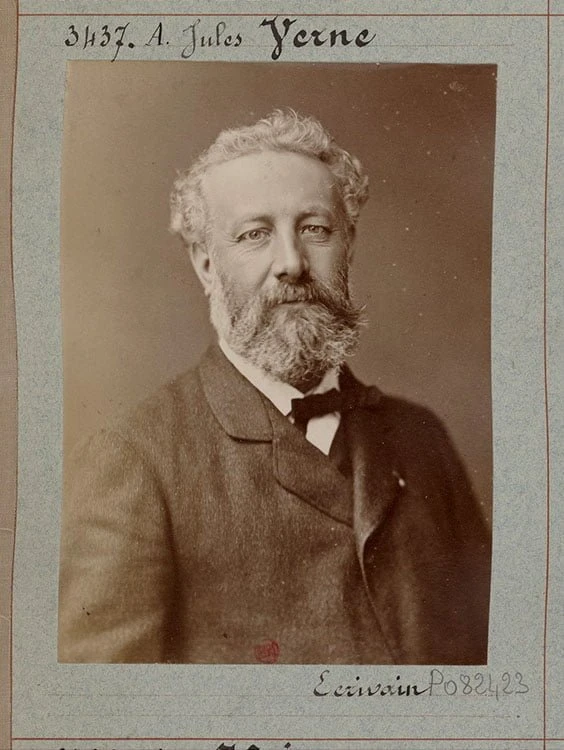
Robida was not alone in these speculations. The 19th century was a fertile laboratory of technological utopias. Jules Verne (1828–1905) gained lasting fame with submarines and trips to the Moon. But there were other, lesser-known visionaries who, in their own way, attempted to decipher the future.
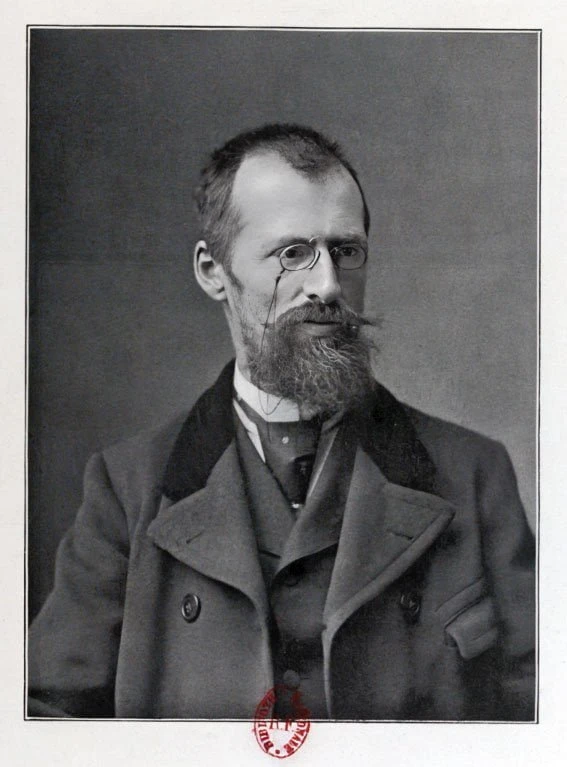
Albert Robida (1848–1926), a French illustrator of considerable talent, dedicated himself to “speculative fiction”—the term we use today to describe these attempts to imagine alternative worlds. Unlike Verne, who focused on extraordinary adventures, Robida was interested in everyday life: how would ordinary people live in the future? How would they work, communicate, love?
For Robida, the answer began with electricity.
The Electric Life of 1952
In Robida's vision, everything depended on electricity. "Aerocabs"—flying taxis—crisped through the skies of Paris guided by headlights. "Tubes"—proto-hyperloops—connected major European cities at fabulous speeds. The Sahara Desert, fertilized by electrical systems, flourished.
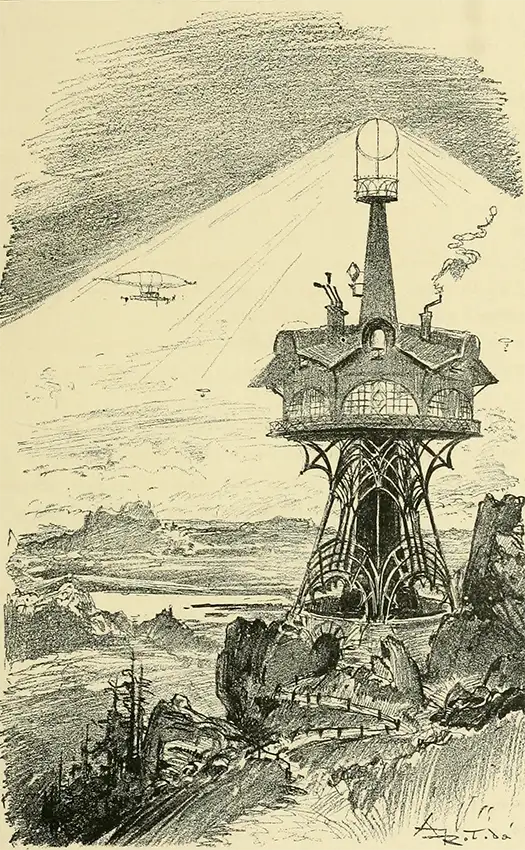
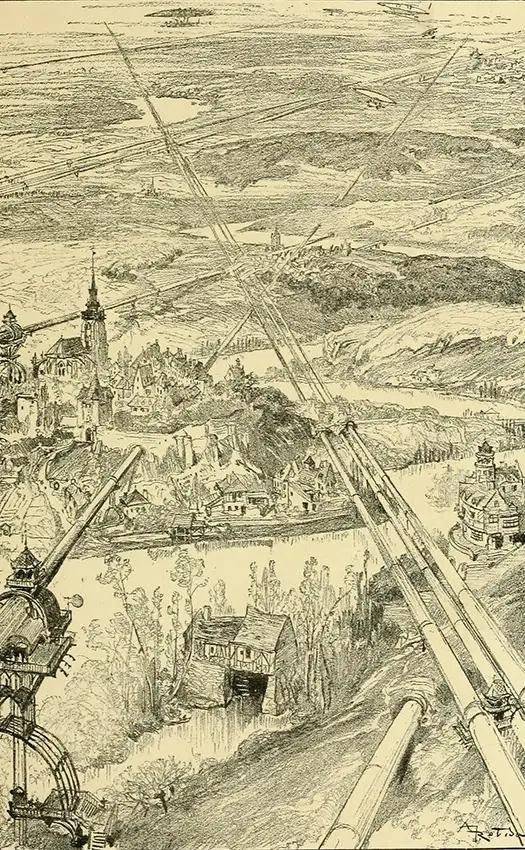
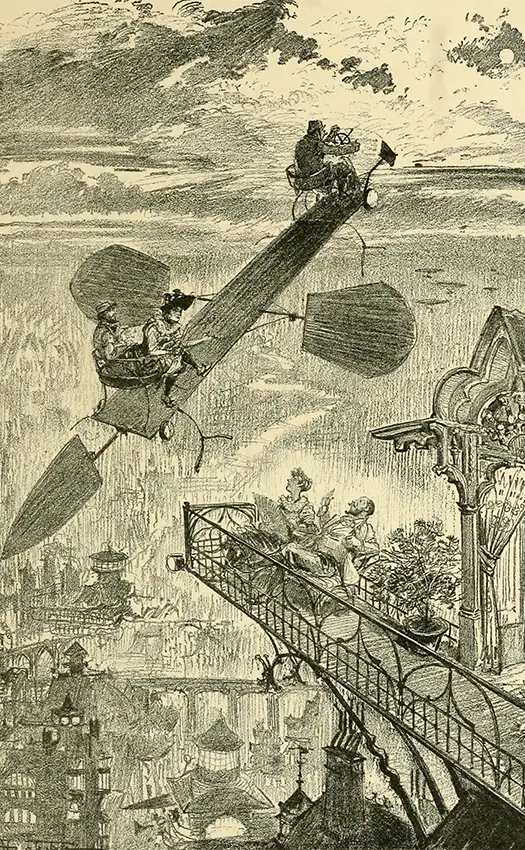
But the most remarkable application of electricity was in the "telephonoscope".
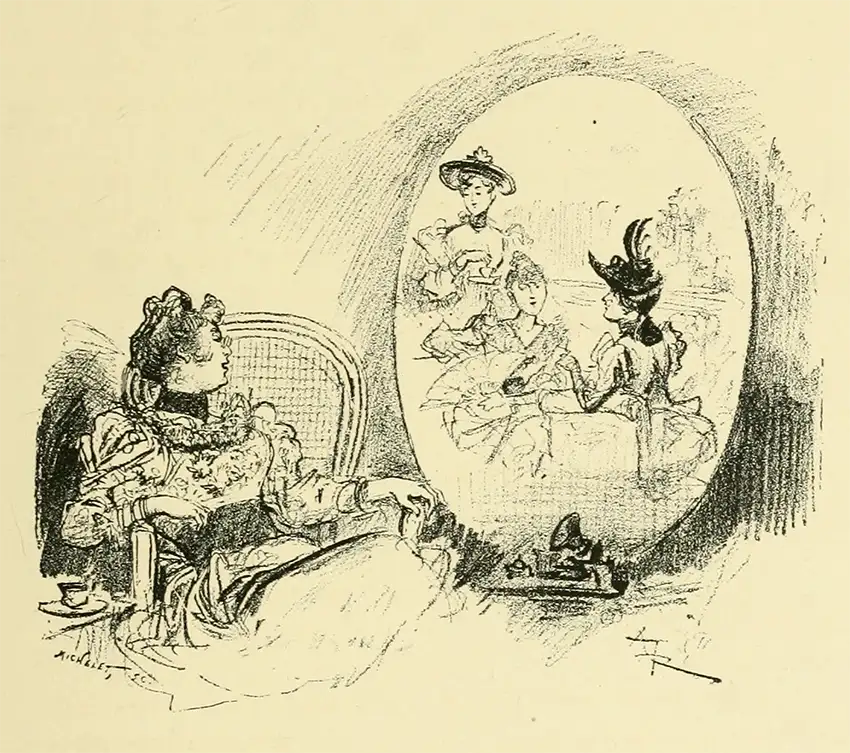
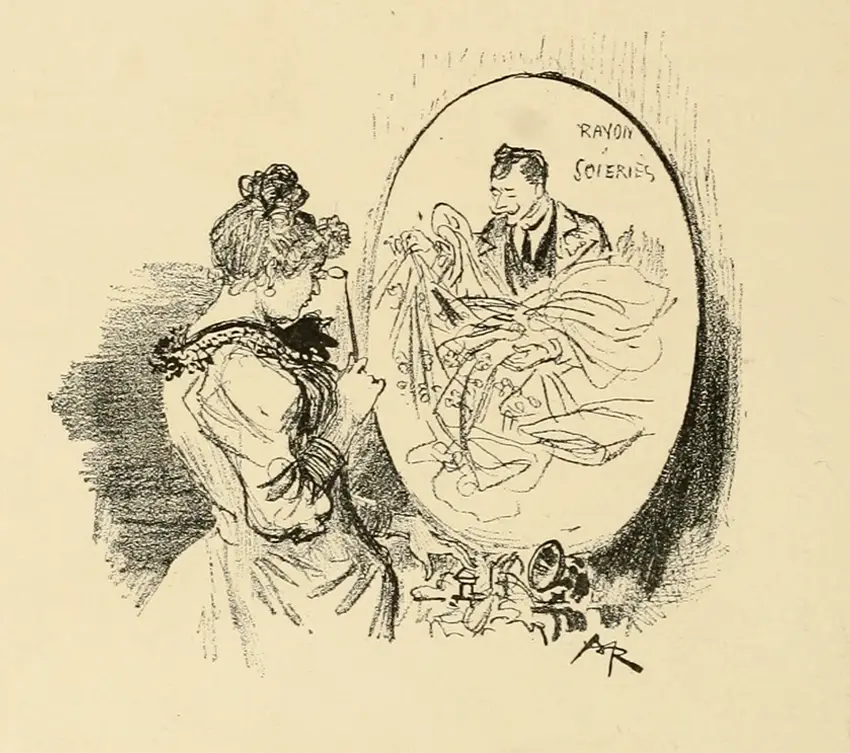
This multifaceted device combined the recent inventions of the telephone (1876) and the phonograph (1877), adding image transmission. It allowed for video conferencing, distance learning, and remote commerce. People could "visit" each other without leaving home, watch live-streamed shows, and shop by viewing products on a screen.
Robida essentially envisioned Zoom, YouTube, and e-commerce. In 1893.
The Accidental Romance
Let's return to Georges and Estelle. Their story illustrates how Robida understood that technology doesn't exist in a vacuum—it exists in human lives, with their chance occurrences and complications.
Georges Lorris was the son of Philox Lorris, a celebrated scientist. He lived in Paris and worked in his father's laboratory. Estelle Lacombe lived in Lauterbrunnen-Station, Switzerland, at an alpine lighthouse station run by her father. Her mother, a Parisian exile at the time, would seize any opportunity to catch a flight or a plane back to Paris—an afternoon of shopping, dinner with friends, speculation on the stock market.
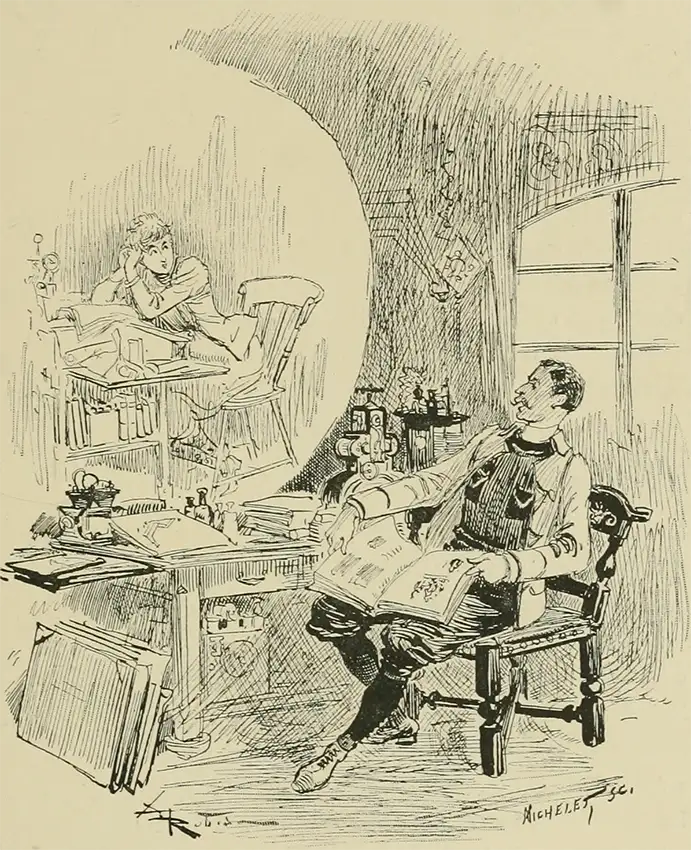
Estelle was preparing for her engineering exams for the third time. She studied using phonographs and followed courses broadcast via telephonoscope. But the antiquated regulations didn't allow her to take the exams remotely. She had to appear in person. Her shyness was hindering her.
When the storm disrupted their communications, Georges offered to send her his father's notes. They began to speak regularly. He was impressed by her intelligence, by the grace of her gestures as seen on the screen. She admired him without daring to admit it.
Robida was describing a long-distance relationship mediated by technology. He was imagining how people would meet, work, and love through screens. One hundred and thirty years before Tinder.
Visionary Elements
There are aspects of Robida's work that impress with their precision. Beyond the telephonoscope, he imagined:
- Remote workEstelle studied at home, following courses broadcast from Zurich and Paris. The examiners could see dozens of students simultaneously through their telephonoscopes.
- Distance commerceMadame Lacombe could see fabrics and clothes transmitted by Parisian shops, but she preferred—in a shrewd psychological trait—to go there in person. Robida realized that technology does not necessarily eliminate the desire for the physical.
- Women's emancipationDespite the conservatism of the time, Robida envisioned women engineers with professional careers and higher education. Estelle was destined to join the administration of the Alpine Lighthouses, with a guaranteed salary and career progression. Robida even mentions common-law unions and cohabitation without marriage.
- Infrastructure networksHis understanding that the future depended on complex networks—electrical, communication, transportation—was remarkable. When a storm damaged the wires, the whole society collapsed.
Failed Elements
But Robida also made mistakes, in revealing ways.
In his imagination, war would be peculiar. Biological weapons calibrated to spare "men in the prime of their strength and health" and target only "the infirm, the weak, the diseased." There is an almost comical innocence here. Two world wars—1914–1918 and 1939–1945—would demonstrate that modern warfare does not discriminate based on health.
His illustrations depict regiments of soldiers on bicycles with spears at the ready, like Greek phalanxes. Infantry in armor. Robida romanticized war even while projecting it into the technological future.
And then there was medicinal electricity. Robida, like many of his contemporaries, believed that "electric fluid" had therapeutic powers when applied to the human body. It was a widespread belief at the time, now completely discredited.
The Unlikely Success
What makes Robida fascinating is not the mistakes — any futurist makes mistakes — but the improbable successes.
He understood that remote visual communication would transform human relationships. That distance learning would be viable. That commerce would migrate to remote formats. That people would work, study, and socialize through screens.
He imagined, at a time when the telephone was seventeen years old and electricity was just beginning to illuminate homes, a world entirely dependent on instant visual communication networks.
It took 130 years. But it happened. During the 2020 pandemic, when millions of people worked remotely, studied via video conference, and dated through screens, we lived in Robida's world.
The Fragility of Predictions
There's a lesson here about futurism. Robida was right about communication technologies, but wrong about war. He imagined flying planes—and he was right—but designed them with absurd shapes. He predicted female emancipation, but maintained paternalistic treatment of women.
He correctly perceived that electricity would be central—he was right. But he imagined it as a healing force—he was wrong. He understood that communication networks would transform society—absolutely right. But he imagined they would serve primarily for entertainment and commerce, not for political manipulation and mass disinformation.
The future always proves to be more complex, more contradictory, more strange than any prediction. But there is something moving in the attempts. Robida, with his telephonoscopes and aerocabs, tried to imagine how his grandchildren would live. He was wrong a lot. He got some fundamental things right.
And Georges and Estelle, separated by mountains but united by a screen, fell in love through a technology that didn't yet exist—they exist now, by the millions, in our video calls and messages, in our relationships mediated by technology.
Robida envisioned them first. In 1893, when the world still walked and was illuminated by gaslight, he saw our future. Not all of it. But enough to make us think: what are we failing to see in our own future? And what visionary, somewhere, is right now correctly imagining the world of our grandchildren?