
KEY POINTS
Little Walter's Innovative Clown Style
Walter redefined the Auguste clown with inventive costumes and improvisation, surpassing traditional roles.Partnership with Antonet and Subsequent Split
Walter’s contrasting improvisational style clashed with Antonet’s control, leading Walter to start his solo career.Deep Connection to Lisbon
Although Belgian-born, Walter embraced Lisbon as his chosen home, forming strong family and cultural ties.Impact of World War I on Walter
The war uprooted Walter’s life and career, causing him to exchange his clown persona for a soldier's uniform and marking a decline in his performances.It has been a few years since I last sat in the audience of a circus ring. In fact, I never had much enchantment for its wonders. But something changed when a small child pushed me there, whenever the caravans set up just a few metres from our house.
Daily, we conducted the “inspection” of the setup. When the big tent went up, that girl’s eyes sparkled with such intensity that all I could do was reach for my wallet.
I remember perfectly the last time.

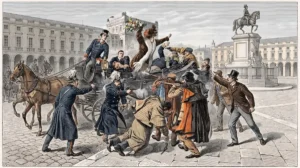
It was ten years ago when a circus arrived in town that featured almost the entire Disney imagination on its poster. As soon as I saw them, I knew I had to take my daughter to that circus.
Sitting there, in anticipation, we felt the collapse of illusion. Just like me, she was flooded with the sadness that the performers carried in their hearts, in their eyes, in their manner. A sadness they sought to hide at all costs.
After fifteen minutes, the girl gently asked to go home. She was sad. She didn’t want popcorn.
I never went back to the circus. My daughter did.
When old things bring new emotions
I remembered this story when, recently, I found an extensive report published in the magazine Illustração Portugueza on 8 February 1908. It spoke of a clown named Little Walter — Alexandre Ulrich — who performed at the Coliseum in Lisbon.
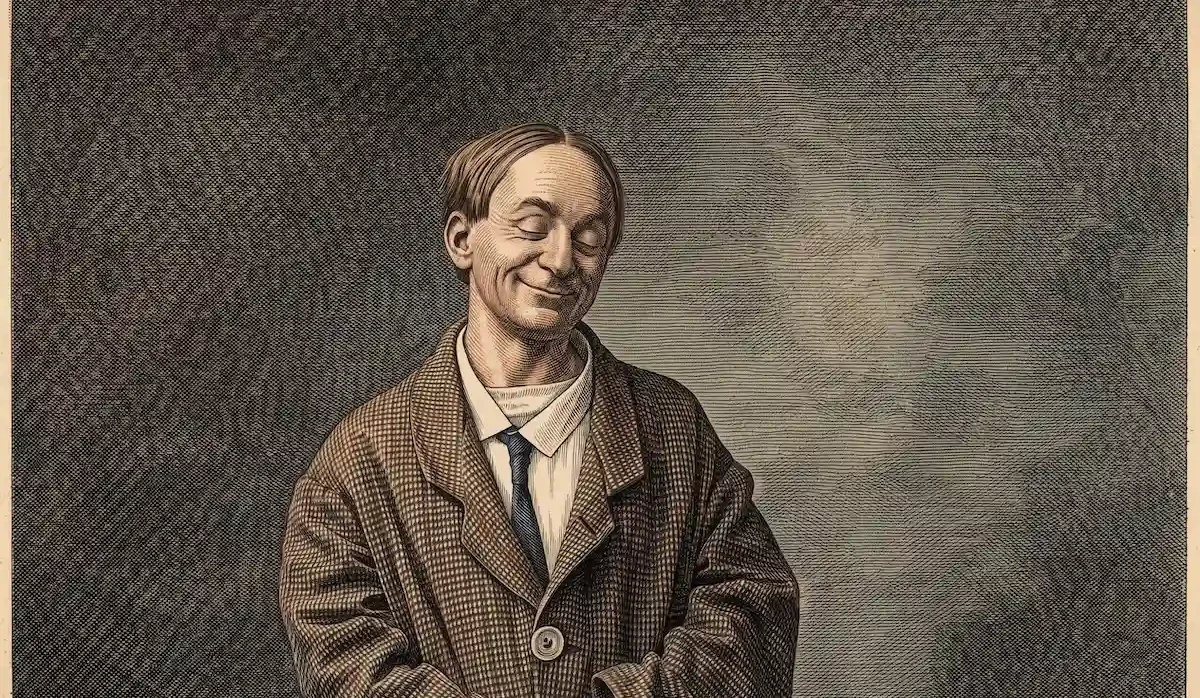
I looked closely at the photographs. There he was.
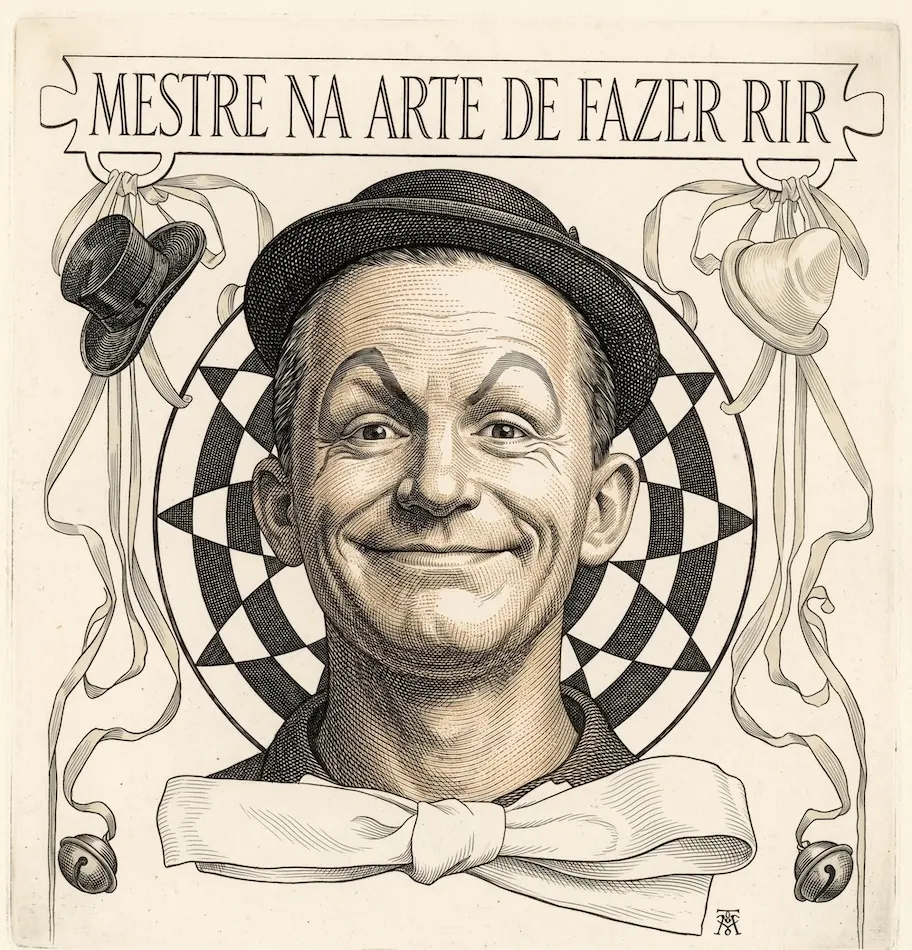
The disillusioned gaze and the smile that was nothing more than a caricature. A sad joy beneath the white paste, speckled with reddish stains, that covered his face. Beneath the thick, arched eyebrows drawn above his eyes, there was something I recognised.
After all, perhaps there is something profoundly dramatic about the circus. Perhaps it is the caricature of life, with its pains, frustrations, and joys. Showing happiness when inside one is crumbling — isn’t that what we all do?
Three shillings a day and a bigger dream
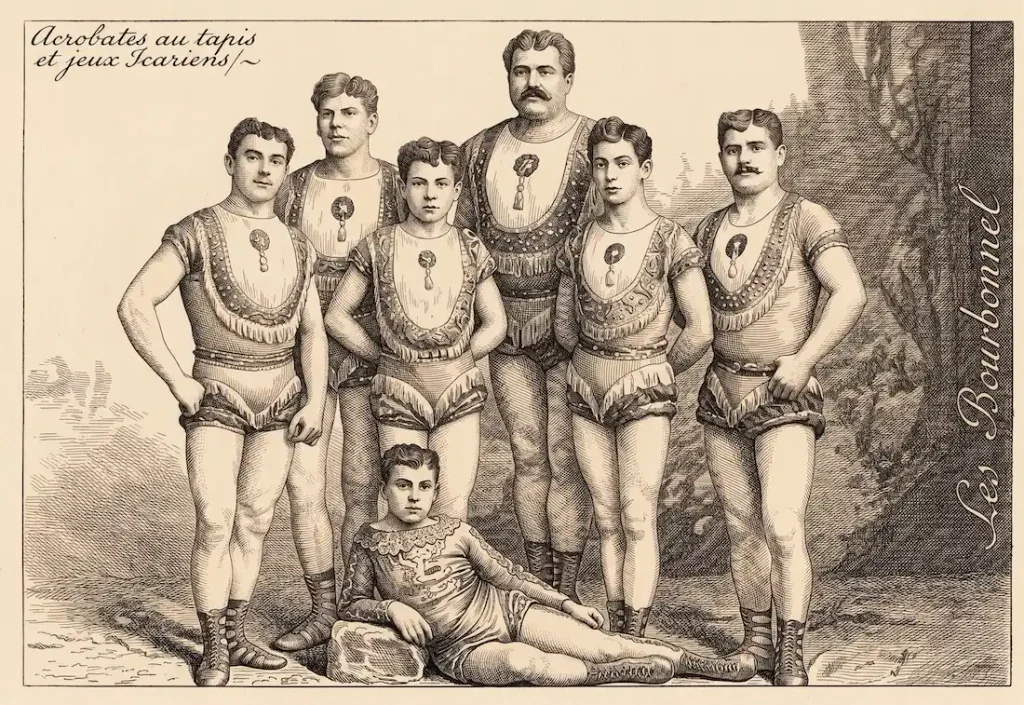
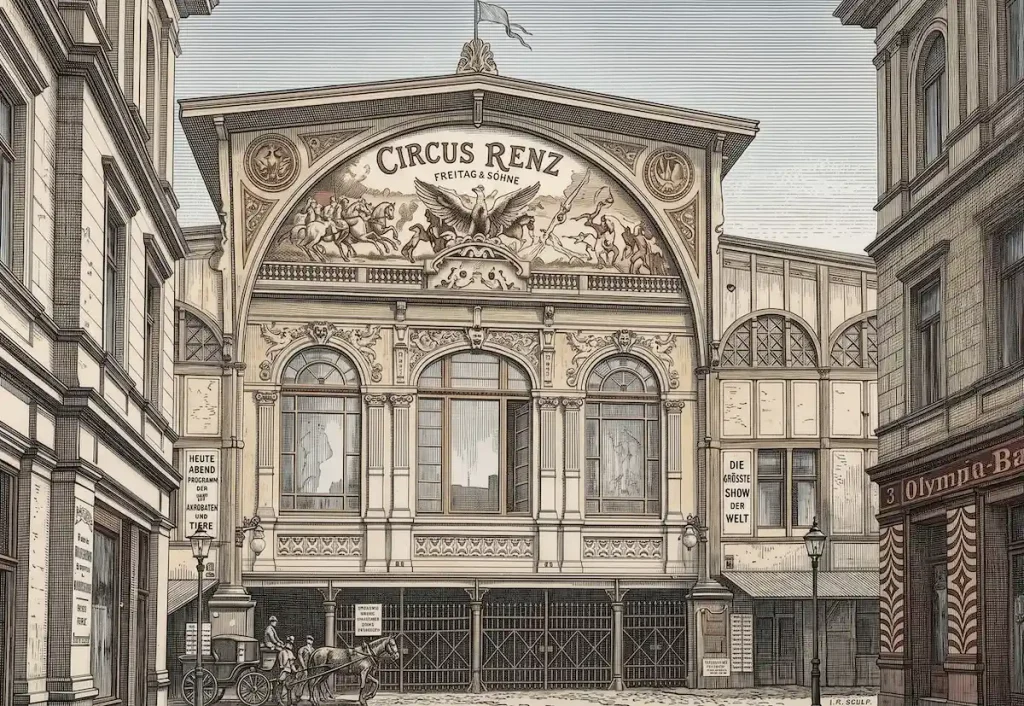
Born in Liège, Belgium, in 1879, Walter began his career very young in an acrobatic troupe called “Les Bourbonnel”. He debuted at Circus Renz — a German circus that was in operation from 1842 to 1897 — as an acrobat and écuyer.
He was poorly paid, three shillings a day. His situation was thankless. He was always overwhelmed with ideas, but his role in the troupe was irrelevant, not allowing him to unleash all the creativity that bubbled within him. If only they paid him what he thought he deserved, he might have gained something.
He proposed to be a clown. His big dream.
He invested four shillings — more than a day’s work — in buying a black tailcoat, a huge waistcoat, extremely baggy trousers, and a pair of military boots. Those boots he wore throughout his artistic life. With these pieces, he created a new type of clown: the “Auguste”.
The learning likely came from Tom Belling, a British acrobat and écuyer who worked at Circus Renz since 1869 and was the first Auguste clown. But Walter did not copy — he transformed. There was a restlessness in him, a need to constantly reinvent.
Improvisation as art
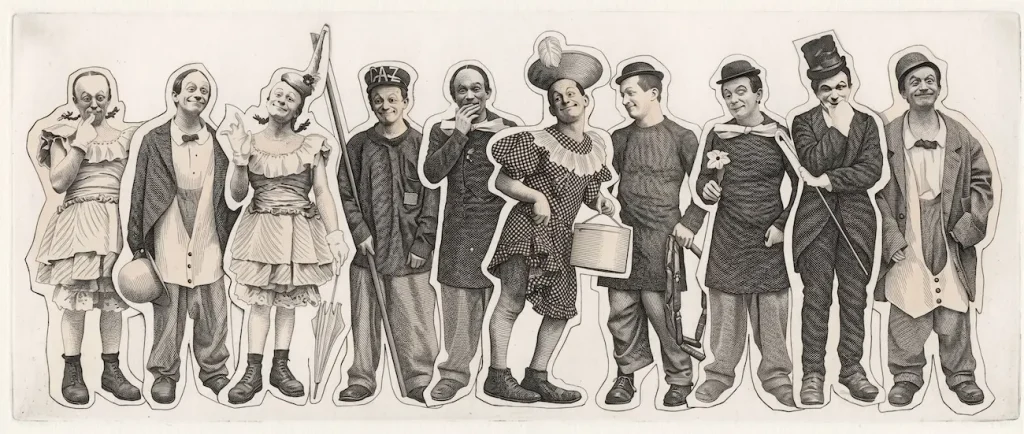
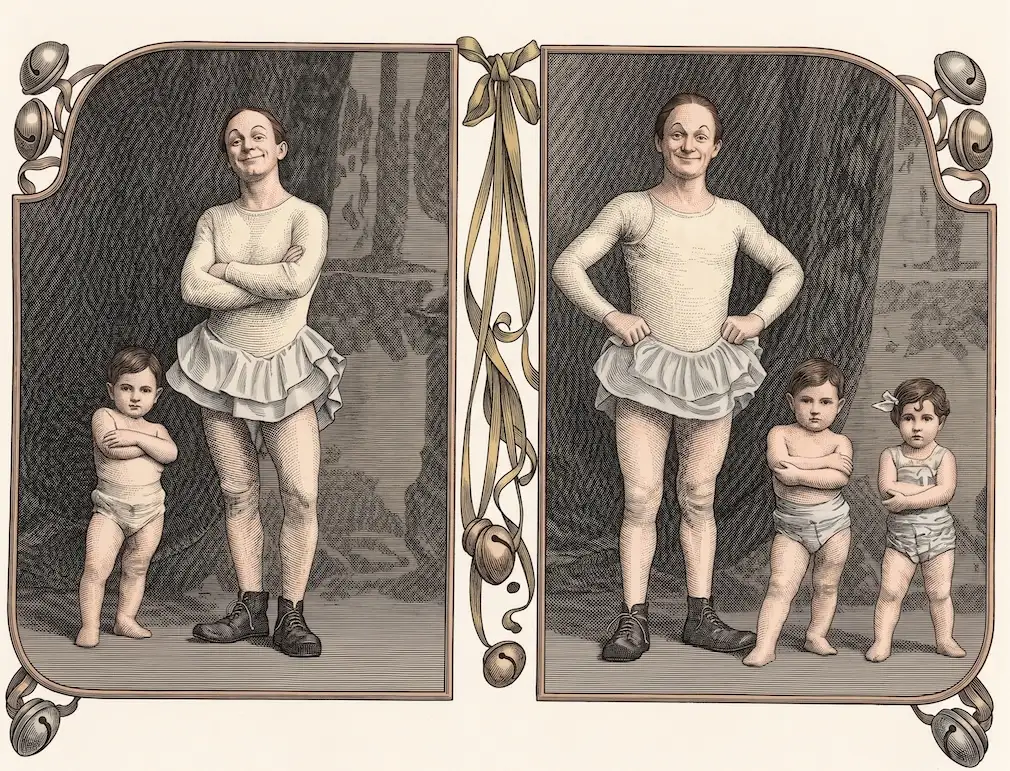
The man behind Little Walter was a person in constant creative hyperactivity. He sought inspiration from everyday characters, proving to be exceptional in female roles, one of his most appreciated transformations.
With Walter, the Auguste dressed in formal wear began to lose relevance. It was monotonous. The audience wanted to be surprised with something new.
Walter’s constant experiments offered this variety. There were no limits. He appeared in checkered suits, culottes with sagging bottoms, trousers with intertwined legs. He displayed a decadent dandy style, of ridiculous and flamboyant elegance.
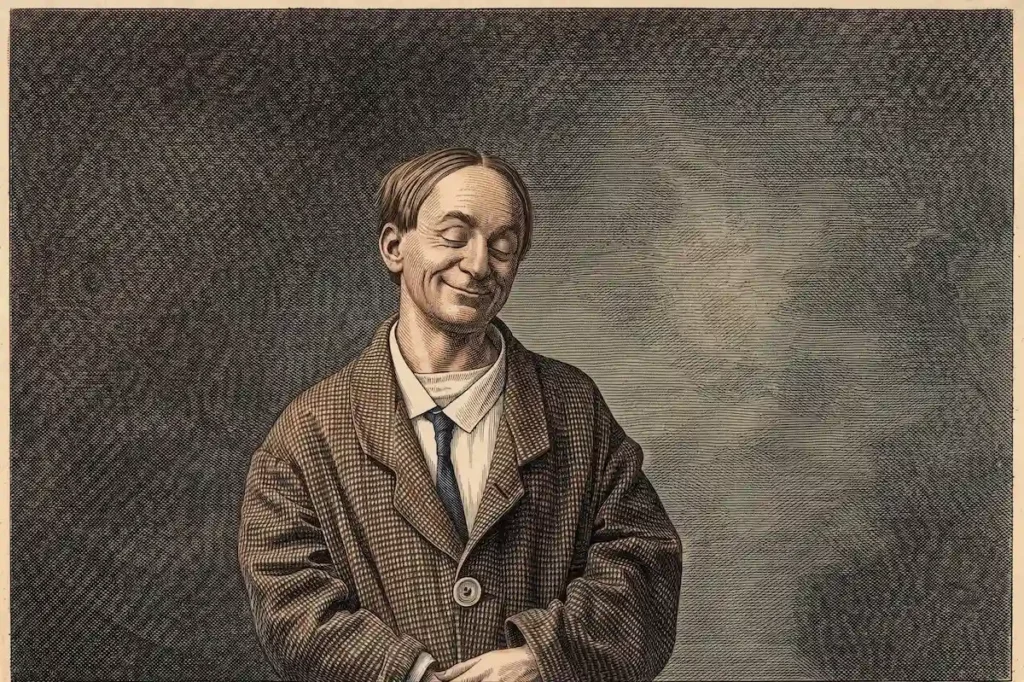
For many authors, such as Auguste Rémy, Little Walter was the “first Auguste whose originality surpassed the clown.” He caricatured the very genre he helped to create.
Antonet and Grock: opposing partners
For ten years — between 1896 and 1906 — Little Walter partnered with Antonet. Together, they developed a set of humorous pieces that became a reference for subsequent generations: “Kubelick II and Rubinstein”, “Hamlet”, “Le Clariniste”, “Le Soldat”.
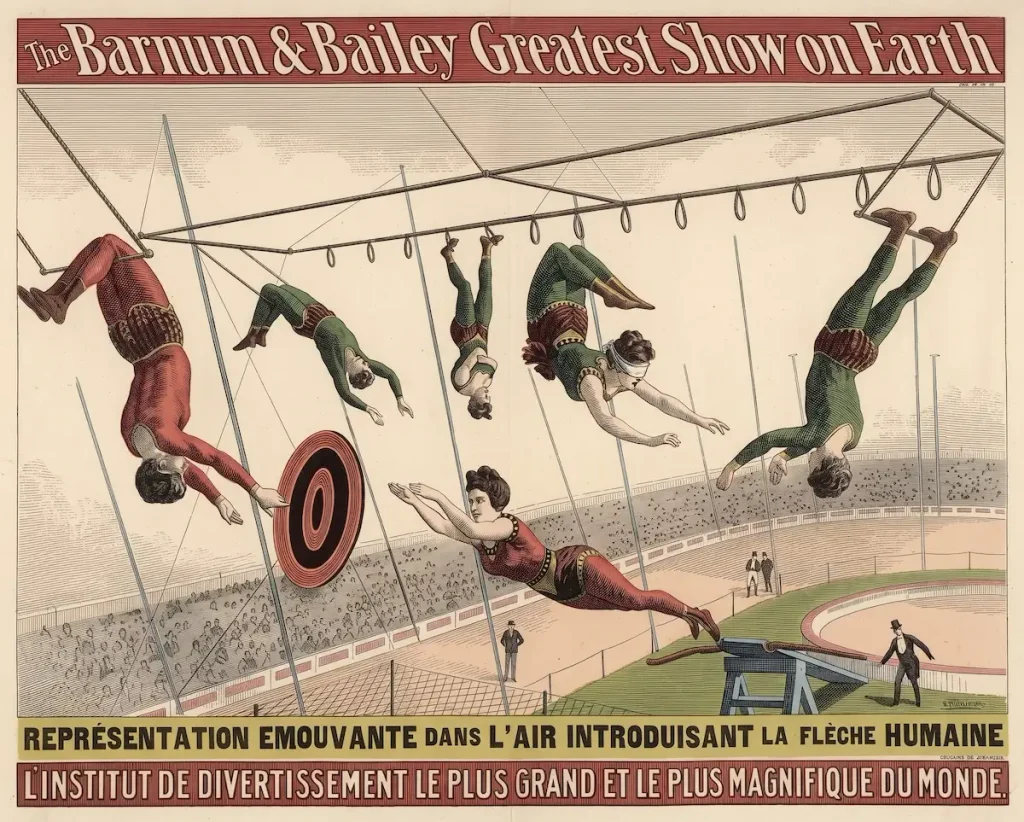
During this period, they performed at The Barnum & Bailey Circus Greatest Show on Earth, by James Anthony Bailey, which toured Europe between 1900 and 1902.
Antonet was obsessively controlling, planning every detail, rehearsing every gesture. Walter was the opposite: extremely versatile, he had a formidable ability to improvise, adapting to the audience in front of him.
“When I perform for the first time in front of an audience I do not know, I start by feeling my way, carefully…,” Walter explained in an interview with Illustração Portugueza in 1908 («Mestre na arte de fazer rir», 1908)Mestre na arte de fazer rir. (1908, fevereiro 3). Illustração Portuguesa, V(102), 129–135..
Perhaps due to fatigue, or because of incompatibilities that became unsustainable, Little Walter decided to leave the duo and establish his own show.
When Antonet began working with Grock in 1906, he found the ideal partner. Unlike Walter, Grock shared the same care for planning, precision, and detail. Neither Antonet nor Grock were famous yet, but Antonet took the dominant role. Grock, less experienced, learned by replacing Little Walter.
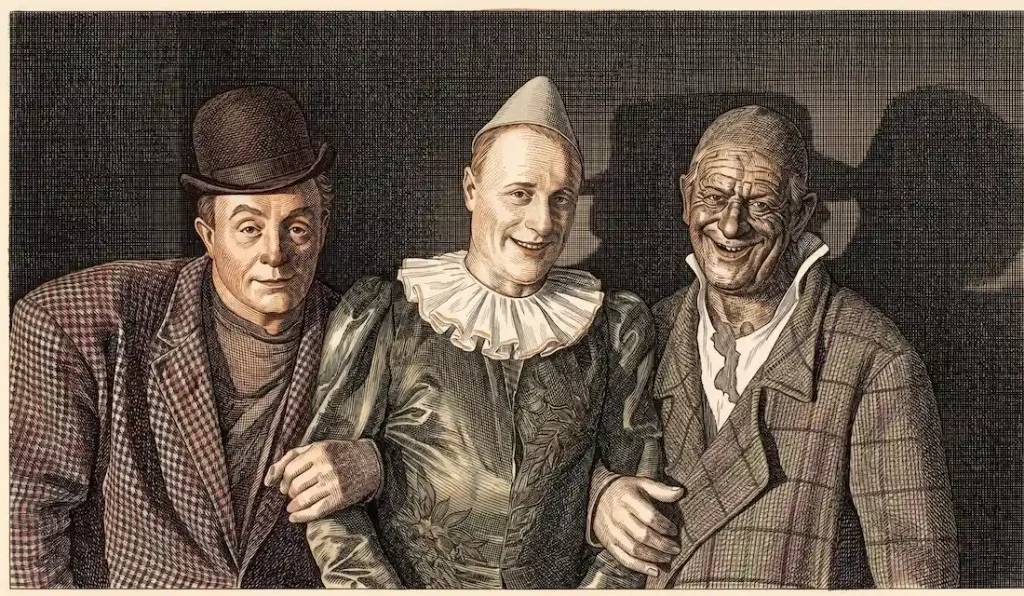
In photographic records, it is very easy to confuse both. The copy was almost perfect.
In fact, Grock may have been the Little Walter that Antonet always desired: methodical, conservative, obedient.
Lisbon: the land where he chose to be born
Although he performed in Portugal for the first time in 1897, at the Teatro D. Affonso in Porto, it was in 1908 that Little Walter became one of the biggest attractions at the Coliseu de Lisboa. His pantomime: “Walter Aviateur”.
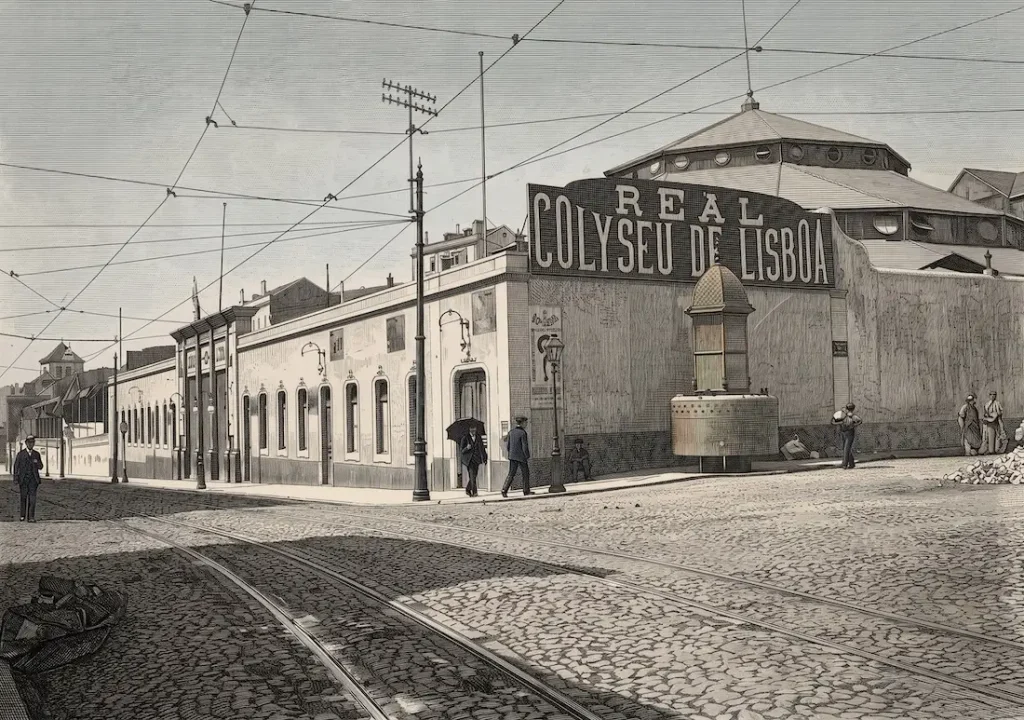
In an interview with the magazine Illustração Portugueza, he described himself as an up-and-coming showman, full of dreams and goals. Married to Emilie Lecusson, a Frenchwoman born in Coimbra, with whom he had two children, he ended up establishing deep ties with the city.
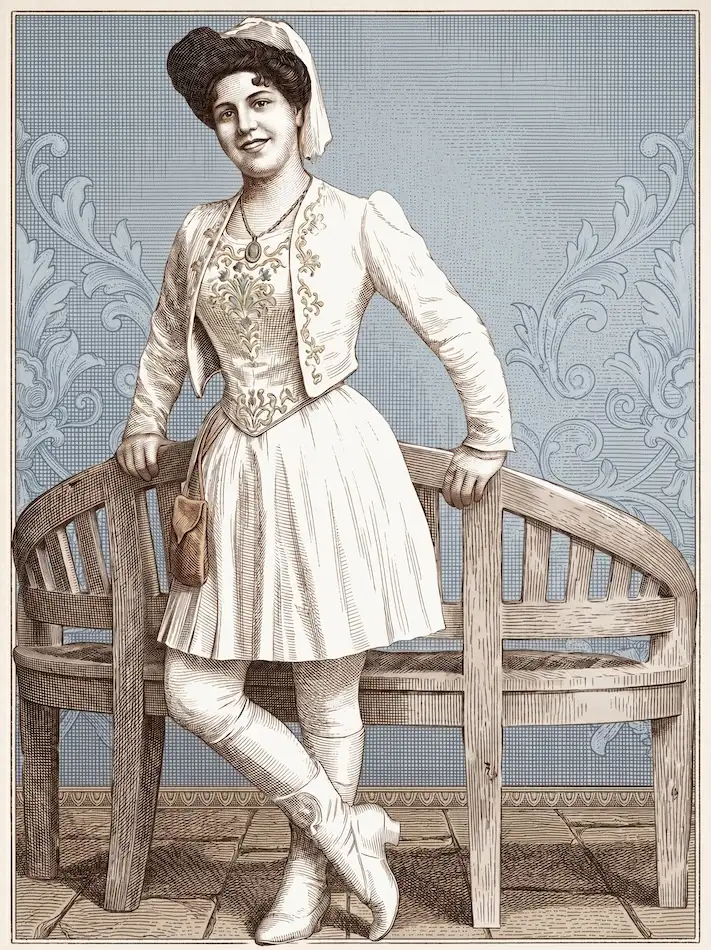
“I love Lisbon, because I know that I have a friend in every spectator and it gives me the impression that I am working in my own land. I already consider Portugal as the land where I was born, because, through many family ties, I am Portuguese. My wife was born in Coimbra, my son was born in Lisbon…” («Mestre na arte de fazer rir», 1908)Mestre na arte de fazer rir. (1908, fevereiro 3). Illustração Portuguesa, V(102), 129–135..
There is something moving in these words. A man who chose where to belong.
The war that took away laughter
Suddenly, the world turned upside down. The winds of war blew devastatingly, taking the lives of millions of young people and marking the beginning of the decline of many artists.
On 7th November 1914, Little Walter was in Bordeaux (Marques, 2014)Marques, R. (2014). 1914, Portugal no Ano da Grande Guerra. Oficina do Livro.. From there, he wrote a letter to his friend Francisco Cerejo, in Lisbon. He had not heard from his son Nené for a long time, who, months before the war began, had gone to Belgium to be cared for by an uncle.
He mentioned in that letter that he would be leaving for Paris and for the war. He wanted to avenge everything that the Germans had stolen from him.
Tell everyone that Walter will no longer be clowning around. I will no longer be the military intermediary I used to be. Now, I will be a real soldier, because the Germans have stolen everything from me, my homeland, my parents, and my son. I will avenge the blood of my brothers. I will kill or die. Remember me sometimes, as I have always been your friend.
The return and the curtain falls.
After the First World War, he spent several seasons at the Cirque d’Hiver in Paris, directed by Gaston Desprez, with Ilès, E.P. Loyal, and his son Joe Walter.
But he returned to Portugal. He rented a house on Rua da Glória in Lisbon, dedicating himself to the tournées of his Circus Music Hall through the cities and towns of Portugal.
In June 1937, the magazine Ilustração reported that Walter had received the Benemerência commendation, awarded by the Portuguese Government for his performances in orphanages and children’s hospitals. He also received the gold medal from the city of Porto.
In April of that year, he set off on a new tournée. He fell ill in Abrantes. In Castelo Branco, his health deteriorated. His son-in-law Geo — married to his eldest daughter, Elena Walter — even tried to arrange for him to be admitted to a hospital in Lisbon.
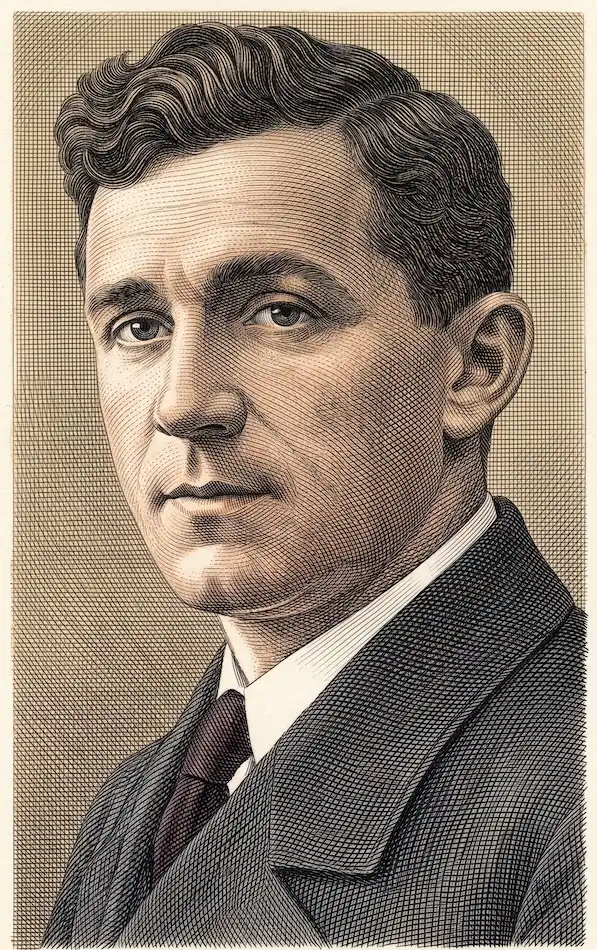
There was nothing more to be done. Little Walter’s smile faded. The curtain of the Circus Music Hall fell.
He died in Castelo Branco in June 1937, poor, but surrounded by his entire family who, like him, lived to entertain and make others laugh.
I think of this when I remember that afternoon at the circus with my daughter. The crumbling of the illusion we both felt. Perhaps she, at three years old, already understood what took me years to grasp: that the circus is about showing joy when inside we are crumbling.
Little Walter spent his life making others laugh while carrying his own pains. And when the war took everything from him, he managed to exchange the clown’s mask for the soldier’s uniform.
In the end, he returned. He returned to Portugal, to Lisbon, to the land he chose as his own.
It is perhaps one of the most authentic stories about the price of art: bringing joy to others while carrying one’s own sadness. Making others laugh when one wants to cry. Continuing, always.