
KEY POINTS
The regicide in Lisbon
King Carlos I and Prince Luís Filipe were assassinated on 1 February 1908 in Terreiro do Paço by republicans linked to the Carbonária.Political context before the regicide
King Carlos’s reign faced crises and loss of prestige following the British ultimatum, bankruptcy, social tension, and an administrative dictatorship under João Franco.Reaction of the Portuguese people
Despite international shock, much of the Portuguese population displayed indifference or even supported the regicides, revealing a disconnect with the monarchy.Consequences of the regicide
The assassination accelerated the fall of the monarchy, leading to King Manuel II’s brief reign and the establishment of the Portuguese Republic in 1910.There are photographs from January 1908 showing the Portuguese Royal Family in Vila Viçosa. King Carlos and his children among cork oaks, Queen Amélia with the guests, all smiling under the Alentejo winter sun.
I wonder if anyone looked back at them, weeks after the regicide on 1 February 1908, searching for signs. A shadow, a diverted gaze, anything.
Probably not. Tragedy rarely announces itself.
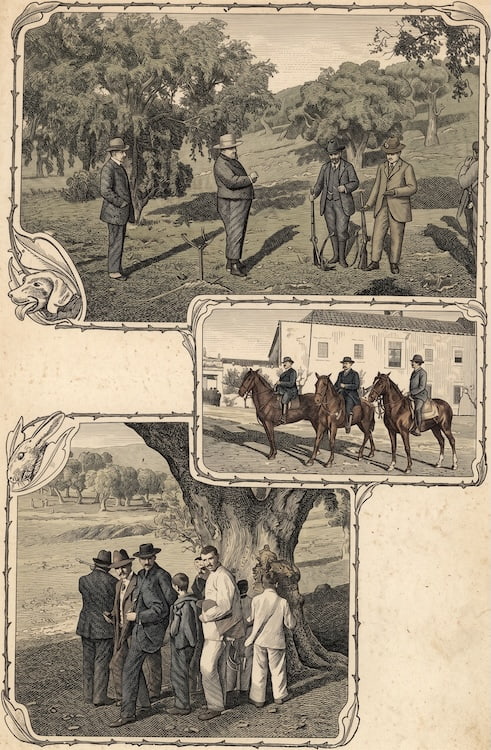
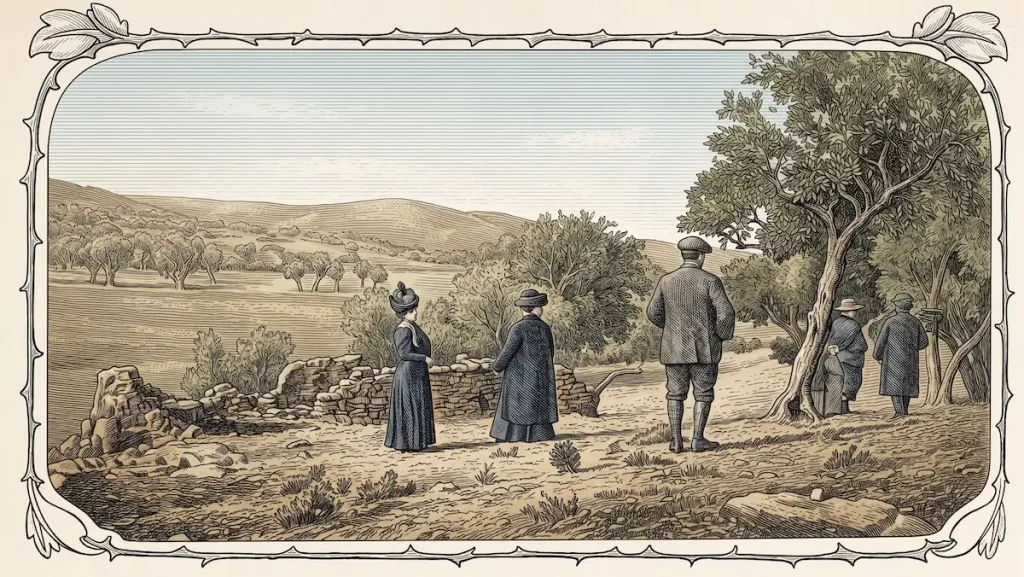
A few weeks later, the regicide in Lisbon would forever change the fate of the Portuguese Crown. Those were the last peaceful days of the Portuguese monarchy. Death awaited it in the capital, at Terreiro do Paço, at the end of a sunny February afternoon.
And what still puzzles me today is not the violence. History is full of assassinated kings. It is what happened — or did not happen — in the following days.
What was the regicide in Lisbon?
The attack on 1 February 1908.
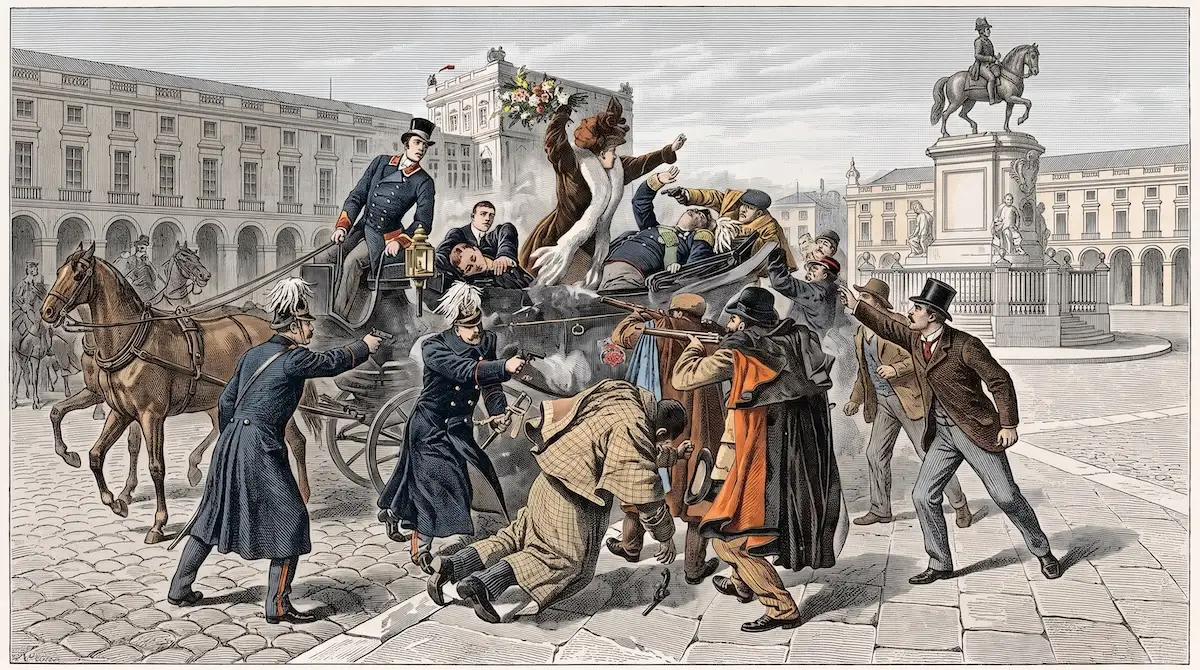
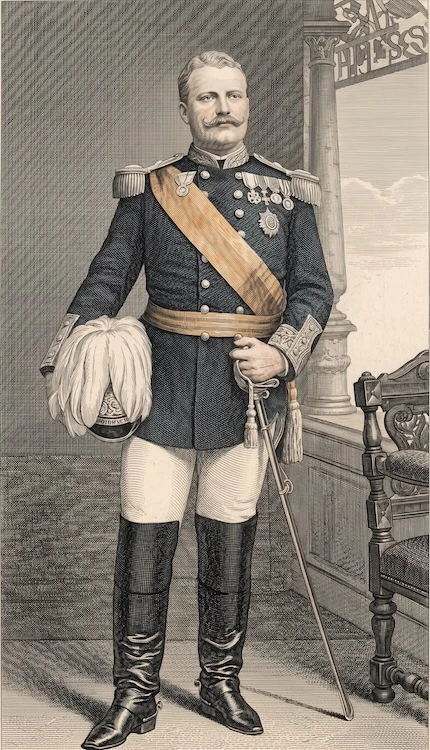
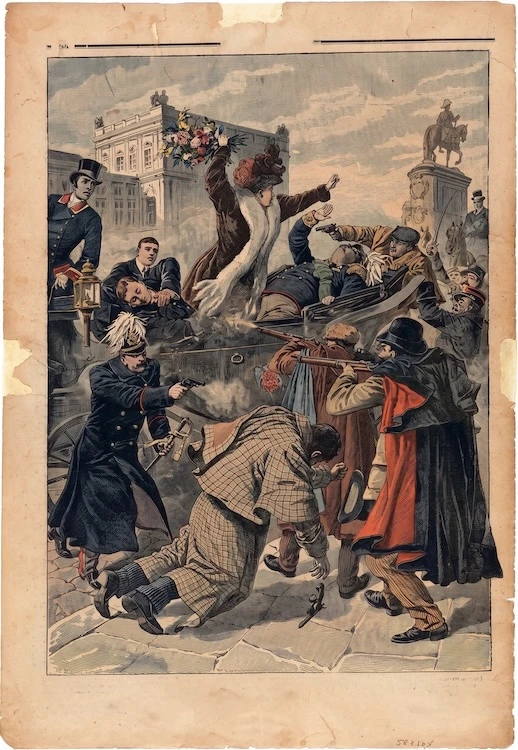
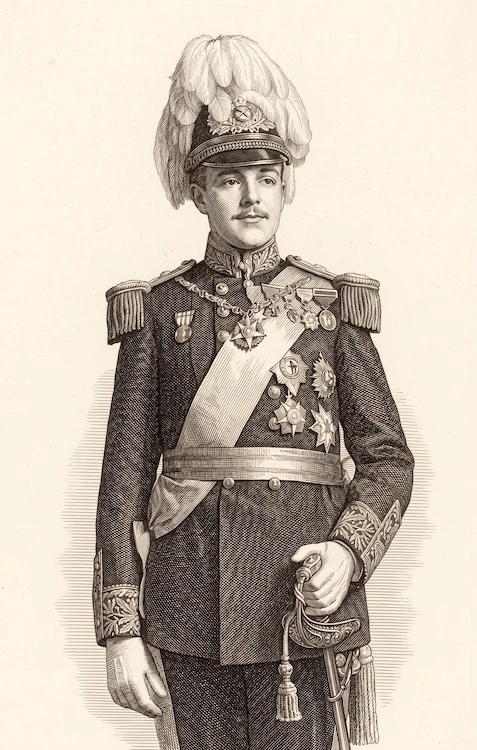
The regicide in Lisbon was the assassination of King Carlos I and the heir apparent Prince Luís Filipe, shot in Terreiro do Paço as the family returned from Vila Viçosa. They were in an open carriage after crossing the Tagus and disembarking at the river dock, on their way to the Palace.
Who died and who survived?
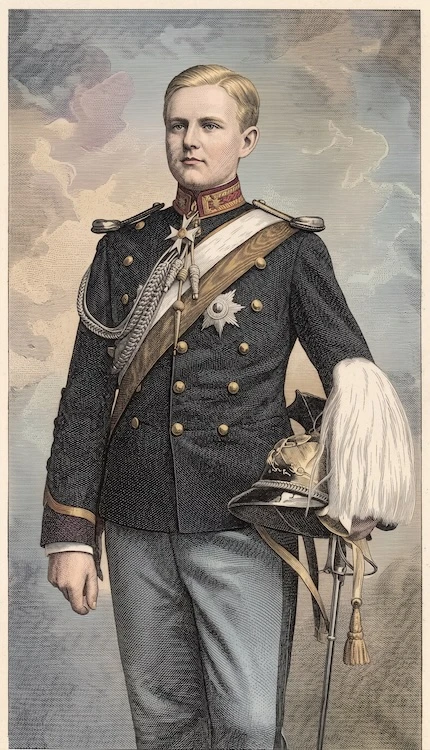
King Carlos I had reigned since October 1889. Luís Filipe, at 20 years old, was the heir prepared to succeed him. Both died that afternoon.
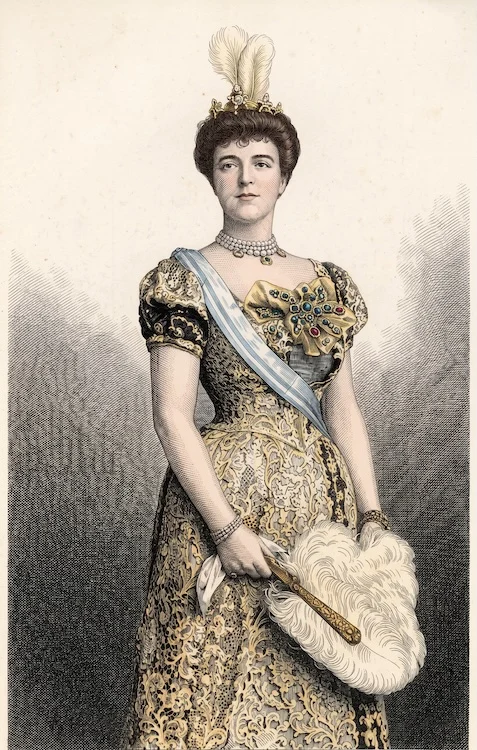
Queen Amélia of Orléans emerged unscathed. Infante Manuel, injured in an arm, would become king that very day, at the age of 18, and would be the last king of Portugal.
Where did it happen?
Terreiro do Paço — now Praça do Comércio — was the space where the monarchy was displayed: the square open to the river, the arcades, the ministries, the official arrival of those coming from abroad. To kill the king there, in view of passers-by, was to kill him twice. Once in person, another in the institution.
The political context before the regicide in Lisbon.
A reign that began with humiliation.
King Carlos inherited the throne at a delicate moment. Three months after coming to power, in January 1890, the British ultimatum arrived.
Portugal was nurturing the project of linking Angola to Mozambique through the intermediate territories — the “Pink Map” — which clashed head-on with the British ambition to connect Cape to Cairo. London demanded the withdrawal of Serpa Pinto’s forces. The Portuguese government conceded. There was no alternative: the kingdom was bankrupt and avoiding a war with the oldest ally seemed the most sensible course of action.

Sensible, perhaps. But costly. The concession provoked what Jorge Couto called an “irreversible erosion of the prestige of the monarchical institutions”; in the eyes of public opinion, the young king, newly arrived on the throne, was revealed to be incapable of defending the country’s interests (Couto, 2008)Couto, J. (2008). 1908: do Regicídio à ascensão do Republicanismo - mostra bibliográfica. Em M. Rêgo (Ed.), Do Regicídio à ascensão do Republicanismo..
Starting a reign with a national humiliation is a bad omen. D. Carlos never shook off that initial mark.
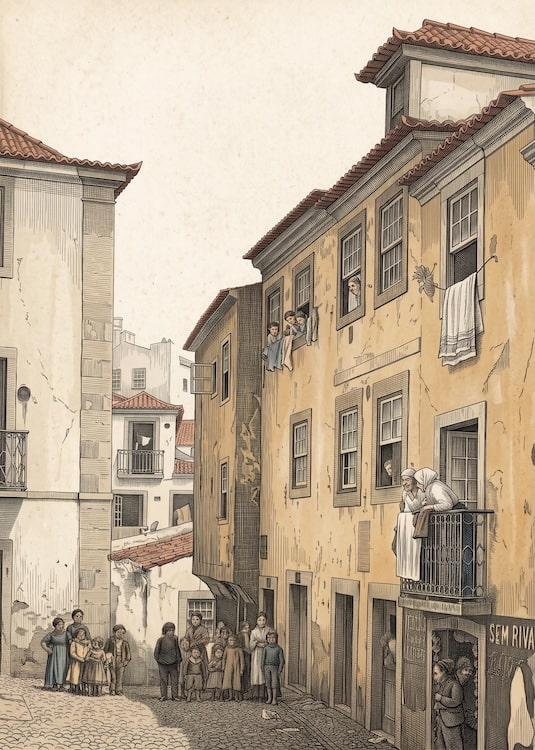
A succession of crises followed. Portugal declared bankruptcy in 1892. It declared it again in 1902. Industrial disturbances, socialist antagonism, fierce press criticism of the monarchy. D. Carlos — a cultured, intelligent man — was seen by many as a king given to extravagances, distant from the real problems of the people. The miserable life of so many Portuguese contrasted with the lifestyle of the monarch, who “participated in numerous social activities where he mingled only with the elites” (Couto, 2008, p. 12)Couto, J. (2008). 1908: do Regicídio à ascensão do Republicanismo - mostra bibliográfica. Em M. Rêgo (Ed.), Do Regicídio à ascensão do Republicanismo..
There is a tragic irony here. D. Carlos’s father, D. Luís I, had become known as “the Popular” precisely for having created an empathetic connection with the people. The son could not. Or did not know how. Or did not have time.
João Franco and the administrative dictatorship.
In response to the crises, D. Carlos bet on João Franco. The new government was formed on 2 May 1907 and, eight days later, dissolved parliament and began to govern by decree.
What followed was predictable: censorship of the press, dissolution of elected chambers and councils, dismissals of officials, persecution of republicans and also of monarchists not loyal to the king. There was also the scandal of advances to the Royal House, which directly affected the figure of the monarch (Porto Editora, s.d.)Porto Editora. (s.d.). João Franco. Em Infopedia. Obtido https://www.infopedia.pt/artigos/$joao-franco.
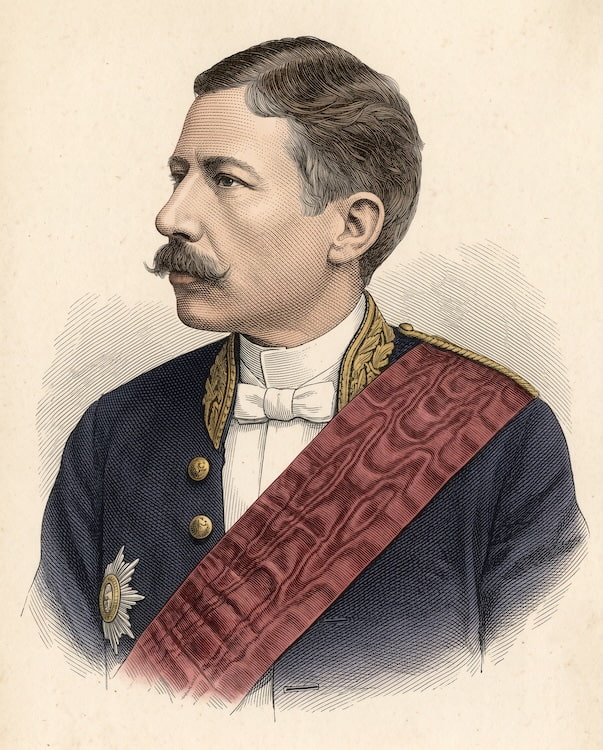
Franco sought to impose order in a country that no longer believed in order. And, by supporting him to the end, D. Carlos went from being the arbiter of the system to being an interested party. He ceased to be the king of all.
Republicans, Carbonária and the Elevator plot.
The end of January 1908 was a tense month. Republicans were radicalising their discourse against Franco and against the king who had appointed him; monarchist sectors removed from power were also not sparing in their criticism (Samara & Tavares, 2008)Samara, M. A., & Tavares, R. (2008). O Regicídio. Tinta da China..
On 28 January, republicans and progressive dissidents attempted a coup known as the Elevator of the Library incident. It failed. But it led to the arrest of several of the most popular republican leaders — among them Afonso Costa, António José de Almeida, João Chagas, and Egas Moniz («A Ferro e Fogo. Os presos políticos», 1908)A Ferro e Fogo. Os presos políticos. (1908, fevereiro 10). Illustração Portuguesa, (103)..
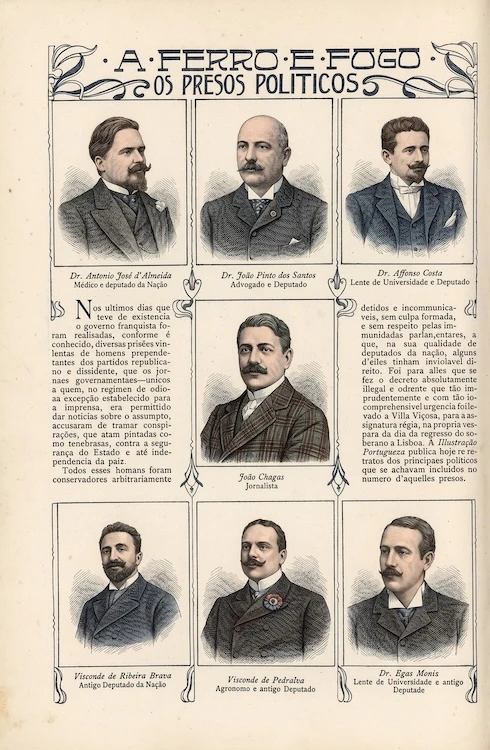
Two days later, in Vila Viçosa, the Minister of Justice visited D. Carlos and had him sign the decree of 31 January, read by the popular and republican Lisbon as a threat to deport their leaders to the colonies.
A king who signs deportation decrees while on holiday, and decides to return to the capital the next day when tensions are high. Perhaps it is not exactly recklessness, but the naive political calculation of someone who has handed over control of the situation to others.
How the regicide of Lisbon occurred.
The return from Vila Viçosa.
On 1 February, the Royal Family crossed the Alentejo by train. The journey was smooth, only marked by a small derailment near Casa Branca, which delayed their arrival by almost an hour.

They crossed the Tagus by steamer. At the river station, they were met by Infante D. Manuel, relatives, friends, and João Franco. They got into the carriages. The procession began to parade through Terreiro do Paço, with an escort that consisted only of the protocol outriders and an officer on horseback.
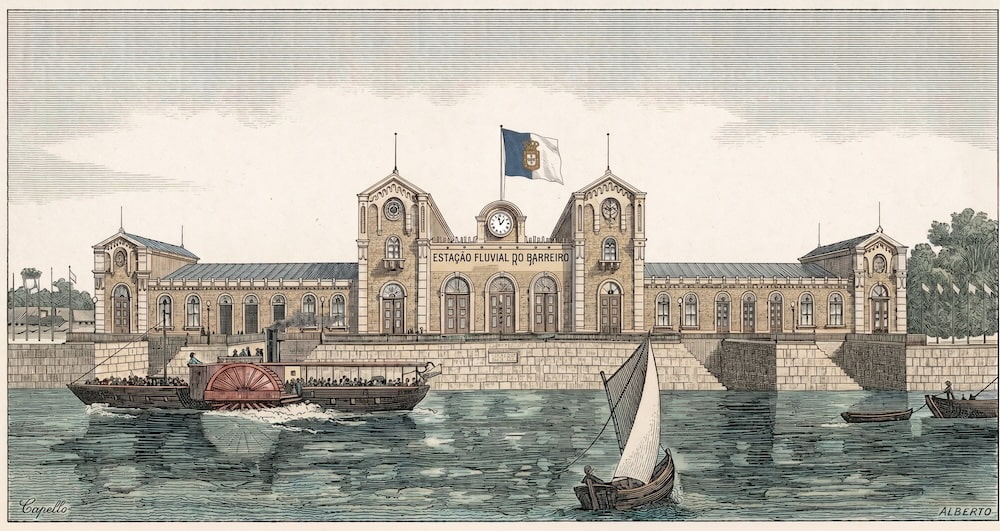
The afternoon was calm. Winter sun, warm, the river clear. The procession moved along the Tagus, veered left, passing in front of the ministries.
Just before Rua do Arsenal, the scene fell apart.
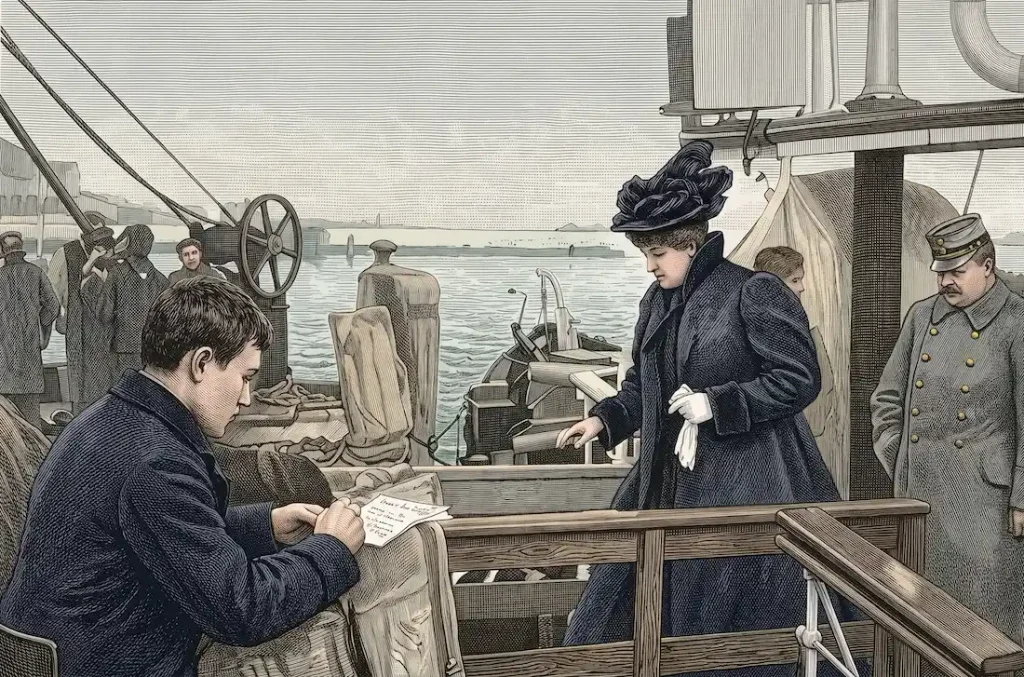
Manuel Buíça and Alfredo Luís da Costa.
Manuel dos Reis Buíça appeared with a rifle and fired at the carriage. Almost simultaneously, from the opposite side, Alfredo Luís da Costa fired a handgun. Both were killed on the spot by the police forces.
They were not madmen, nor unknown individuals without reasons. They were free thinkers, members of the Civil Registry Association, republicans linked to the Carbonária. Days before, Buíça had written a farewell letter asking for his children to be educated in the principles of liberty, equality, and fraternity — knowing that they would soon be orphans («Carta-Testamento de Manuel Buíça», s.d.)Carta-Testamento de Manuel Buíça. (s.d.). República e Laicidade. Obtido https://www.laicidade.org/documentos/documentacao-historica/carta-buica/.
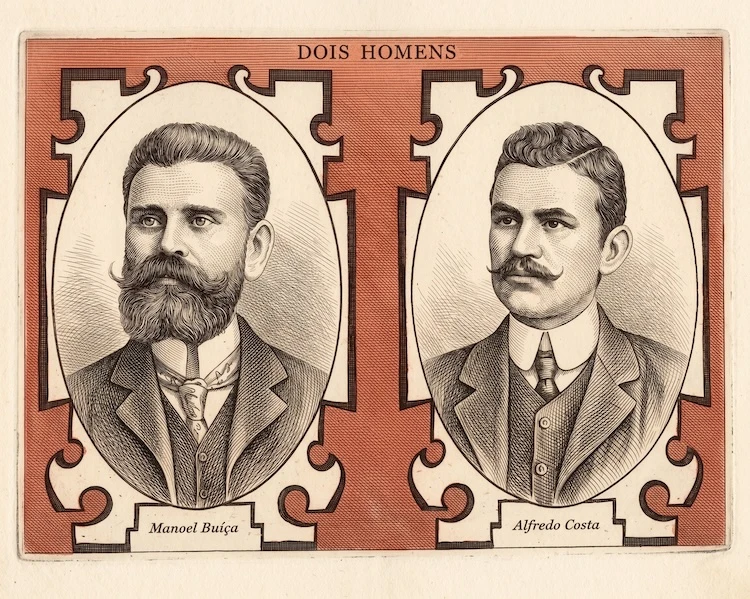
It is a brief and disarming document. A man planning to assassinate the monarch and, the day before, thinking about the education of his children.
Seconds in the Terreiro do Paço.
The escort was caught off guard. The coachman reacted and drove the carriage down Rua do Arsenal, seeking refuge. Too late: the deaths were declared on the spot.
There is something disconcerting about the speed. Seconds. Shots. A dead king, a dying heir, a queen standing in the calèche, trying to assist her own.
The silence of a country.
The news spread quickly. It reached embassies, European capitals, and newsrooms. The world reacted with shock, funeral services were organised, and expressions of sorrow followed one another. Portugal was suddenly the centre of attention.
The reporters dispatched to Lisbon found something else.
The director of ABC wrote that the Portuguese people seemed to welcome the death of their monarch with total indifference. The correspondent from Le Matin shared the astonishment: the general mourning of two months seemed to be observed only by high society and those holding official positions.
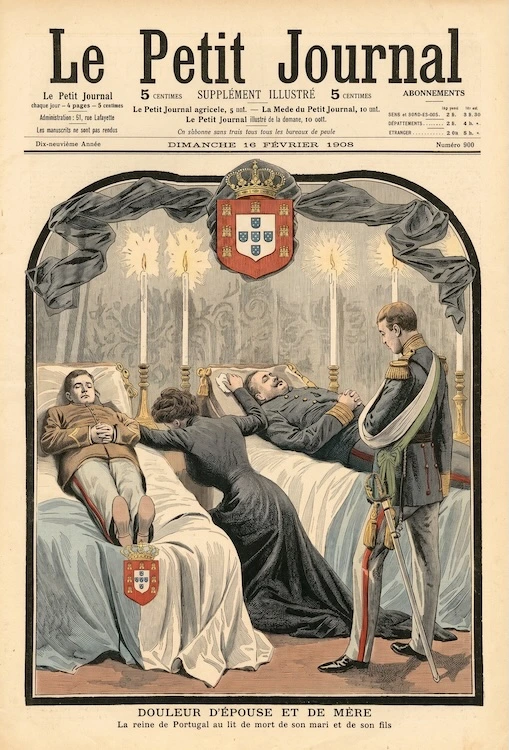
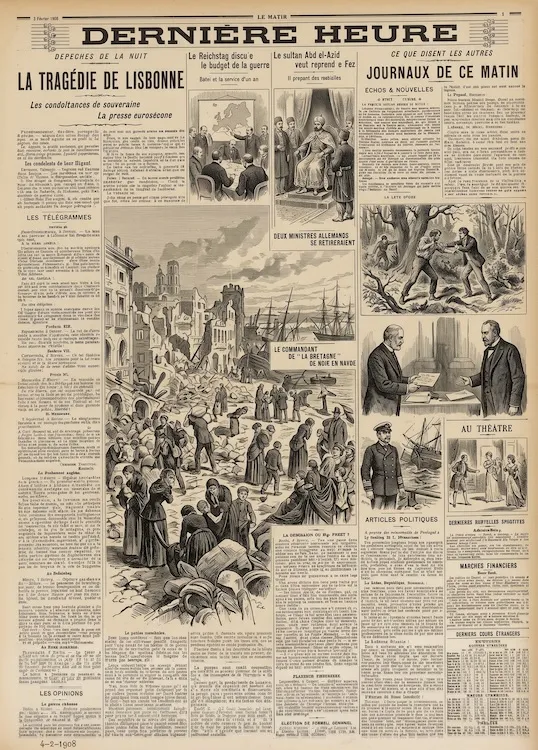
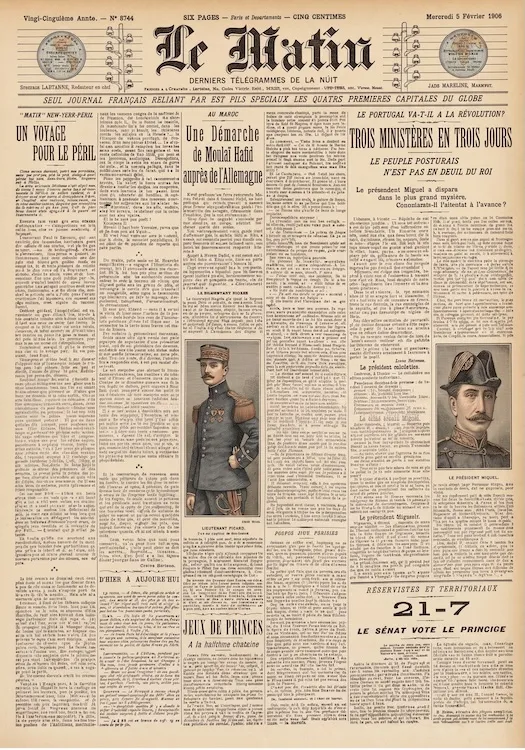
Guerra Junqueiro went further. In a letter to the newspaper Norte, distressed by the death of the prince, he lamented “with dry eyes” the death of the king — and wrote that he was not murdered, that he had committed suicide. He condemned the monarch, rejected violence, admitted that he would never have been able to kill him. And yet, he absolved those who did (Junqueiro, 1908)Junqueiro, G. (1908). Carta de Guerra Junqueiro. Transcrição da carta publicada no jornal «Norte». Jornal de Cambra, 2..
It is a phrase that summarises the moral ambiguity of an entire era.
They did not kill the king: he committed suicide. The king was a malevolent, disturbing monster, aware of four million creatures. If I could kill him in secret, from afar, from my bed, with thought, I would not kill him. For the truth, I have the courage to accuse. Perhaps I would reach, I do not know well, even the courage to die. To kill, I would never do.
But “indifference” may not be the exact word, and it is here that the story becomes more interesting. Because the same country that did not mourn the king formed long queues to see the bodies of the regicides and filled the funeral of Costa and Buíça, despite the authorities scheduling it for the early hours of the morning. The following year, newspapers reported pilgrimages to their graves in Alto de São João. After the Republic, the Civil Registry Association erected a funerary monument that presented them as liberators (Samara, 2006)Samara, M. A. (2006, março 6). Regicídio. Connecting Portuguese History. https://connectingportuguesehistory.org/items/show/137.
It is not indifference. It is something else, harder to face: a country that no longer recognised its kings, and that reserved for the assassins the mourning it did not give to the victims.
The consequences of the regicide in Lisbon.
An 18-year-old king.
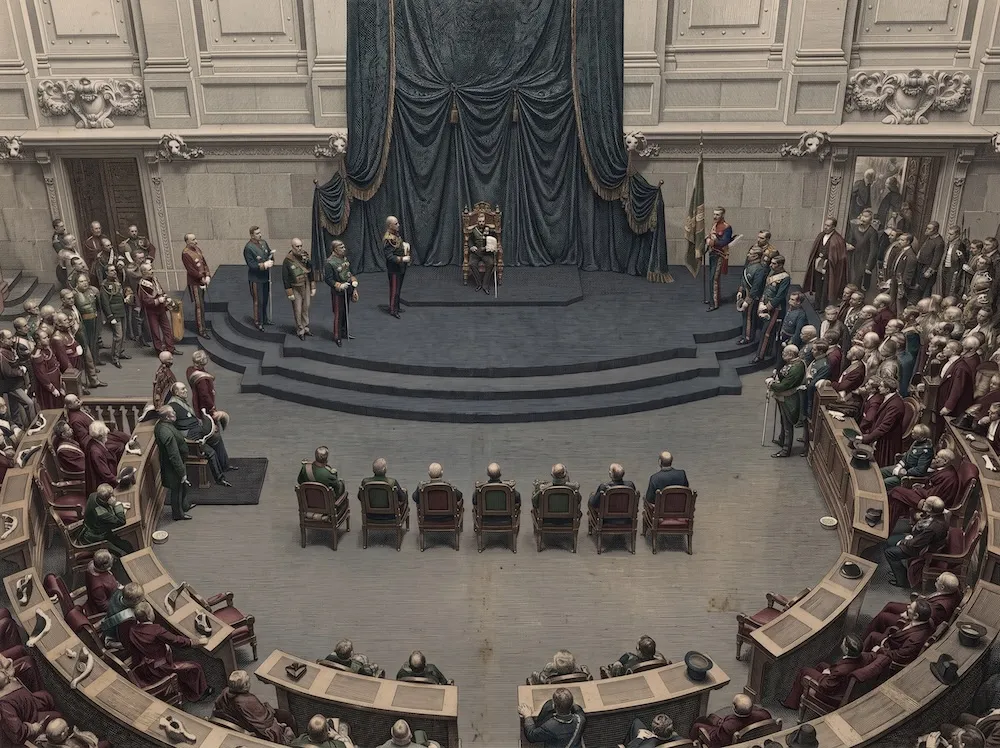
D. Manuel II was proclaimed king immediately. In the diary he began to write right after the attack, he made clear his resentment towards João Franco, who had assured him by letter that everything was calm and that there was nothing to fear (Saxe-Coburgo-Gotha, 1908)Saxe-Coburgo-Gotha, M. (1908). Diário de D. Manuel II: Notas absolutamente íntimas..
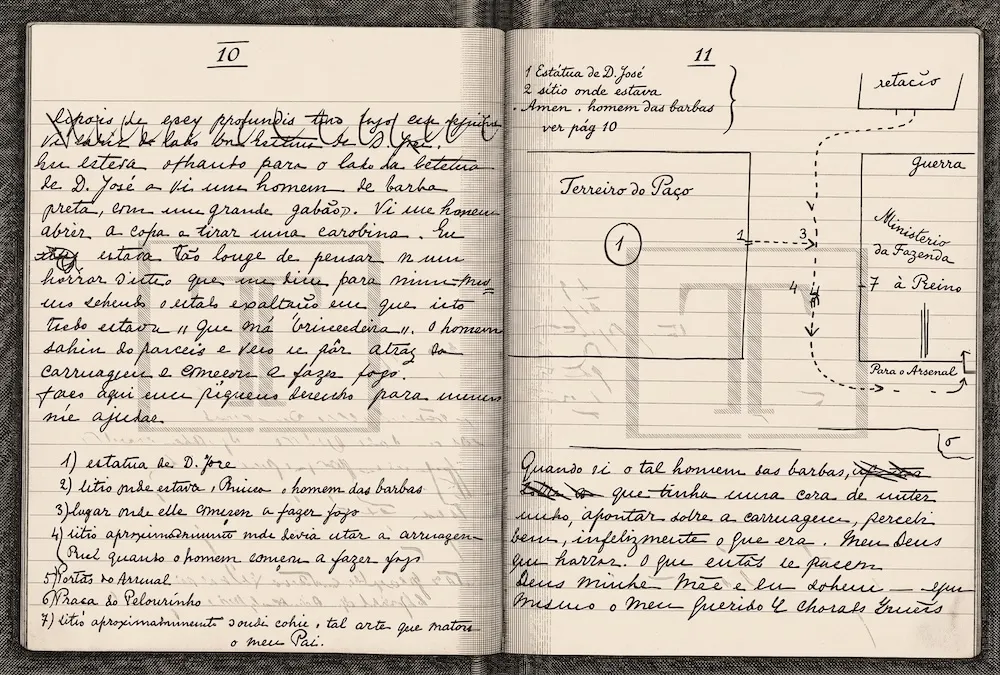
The first act of the new king was to dismiss Franco, who left for Paris. This was followed by a government of calming: annulment of dictatorial measures, release of political prisoners, an attempt to return to parliamentary normality.
Too late again. The wound opened that afternoon was too deep to close with concessions.
The end of the Portuguese monarchy.
The regicide did not alone bring down the monarchy — it is worth stating, because the temptation to draw a straight line between 1908 and 1910 is great. But it accelerated everything. It killed the king, killed the heir, burned the only reform project that remained and handed the throne to a boy without a political base.
On 5 October 1910, the Republic was proclaimed. D. Manuel II, nicknamed “the Patriot”, went into exile in London, where he would die in 1932.
Myths and doubts about the attack.
The monarchical chapter of Portugal had closed that sunny afternoon in Terreiro do Paço. Not with pomp, not with glory, nor even with popular revolt. With gunfire, silence and the strange coldness of a country that no longer recognised its kings.
However, it is worth separating what is documented from what remains open.
Documented: Costa and Buíça were the material authors, acted in a concerted and planned manner, and were republicans linked to the Carbonária(Samara, 2006)Samara, M. A. (2006, março 6). Regicídio. Connecting Portuguese History. https://connectingportuguesehistory.org/items/show/137.
Open: the exact number of shooters in the square, the identity of any accomplices and, above all, the question of the instigators. Accounts from the time refer to shots from other points in the Terreiro do Paço, and later testimonies claimed participation in the attack — none of them sufficiently solid to close the matter.
Frequently misreported: that the Republican Party organised the regicide. The republican leadership in freedom did not seize the moment to proclaim the Republic, and a good part of it actively sought to distance itself from the attack, mindful of how Europe viewed this wave of political assassinations.
The Portuguese case was not unique: Sadi Carnot, the French president assassinated in 1894, Cánovas, the Spanish prime minister (1897), Humberto I, king of Italy (1900), and William McKinley, president of the United States (1901), are some examples that political assassination was, in those decades, a readily available repertoire.
What disappeared that afternoon.
In 2008, on the centenary, a plaque was inaugurated in Terreiro do Paço in memory of the king and the prince, with the usual formula: they died for the homeland. During those days, ephemeral graffiti appeared around the city featuring the faces of Costa and Buíça and a narrative of opposite meaning (Samara, 2006)Samara, M. A. (2006, março 6). Regicídio. Connecting Portuguese History. https://connectingportuguesehistory.org/items/show/137.
One hundred years later, Lisbon still had not decided which side it was on.
I remember the photographs of Vila Viçosa. The smiles among the cork oaks, the January light, that feeling of aristocratic security that permeates the images. None of them suggest what was to come.
All of that faded away in one afternoon.
And what remains is not the violence — history is full of murdered kings. It is the silence that followed, and the noise that was heard from the other side.